Copyright and Permissions for Poetry Anthologies: What UK Editors Need to Know
October 10, 2026 - Poetry
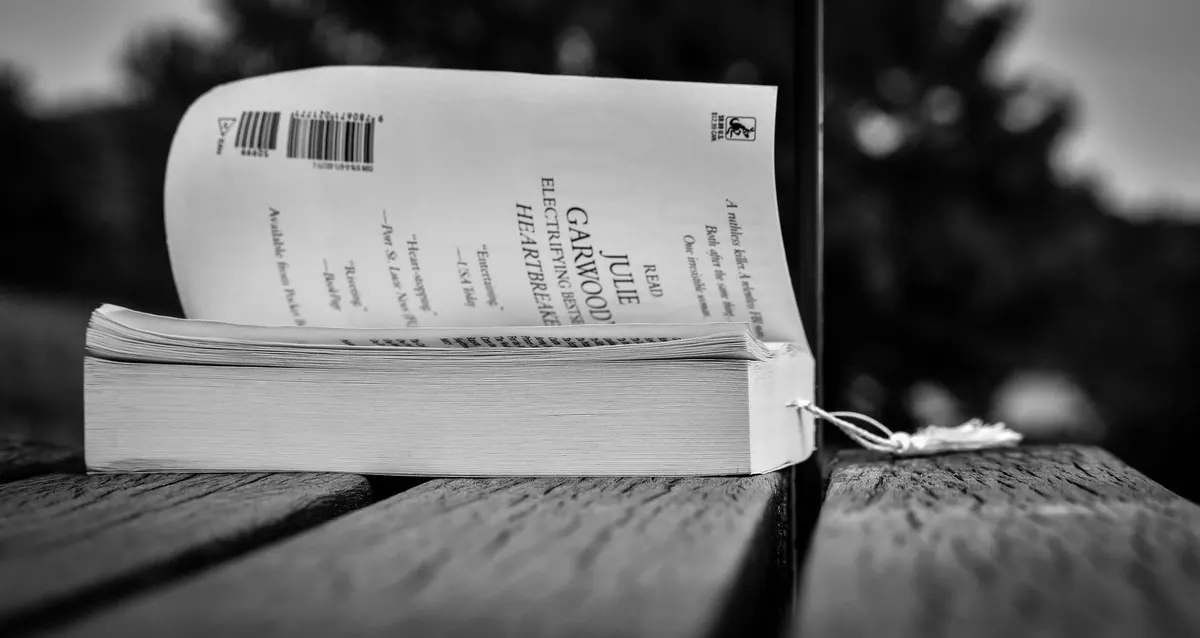
Somewhere between finishing the manuscript and holding the first copy, there is a stretch of administration nobody warns you about. It involves a thirteen-digit number, a barcode that must sit in an exact spot on the back cover, and a legal duty to send your finished book to a national library — whether you print fifty copies or five thousand.
None of it is difficult. It is simply easy to do in the wrong order, and awkward to unpick afterwards.
Think of it as the plumbing of publishing. You do not need to admire it, but you do need it to work before the book goes out into the world. Get it right and the book flows through shops, wholesalers and libraries. Get it wrong and you will spend launch week answering emails about why a distributor cannot scan your stock.
An ISBN identifies one edition of one book in one format. Not the title, not the author, not the series: the specific thing you are selling. UK ISBNs begin 978 or 979, and since 2007 they run to thirteen digits.
The number is how the trade finds you. A bookshop's till, a wholesaler's warehouse, a library catalogue and an online retailer all use that number to order, list, return and report sales. If you want your book to be discoverable by anyone other than a friend with a PayPal account, you need one.
But you do not need a separate ISBN for every creative variation. The rules are more practical than precious:
Where do UK publishers get ISBNs? From Nielsen, the UK ISBN Agency. You can buy a single number, but the economics favour packs of ten or a hundred. If you plan to publish more than one book, or more than one format of the same book, a pack of ten is usually the sane choice. The per-number cost drops sharply, and you avoid the grim experience of buying a single ISBN for a paperback and then realising you also need one for the ebook.
When can you skip an ISBN? If you are printing a handful of copies for friends, a family history that will never enter trade distribution, or a proof copy that will not be sold, you can save the money. The moment you want a bookshop, a library, or a serious online listing to treat your book as a product, buy the number.
An ISBN is invisible. The barcode is what the scanner sees. For most UK trade books, that barcode is an EAN-13 symbol generated from the ISBN. It is not enough to have "an ISBN barcode" — it must encode your exact ISBN, with the correct check digit and the right number of digits.
You will see two common mistakes. The first is a barcode that looks plausible but encodes a different number, often because someone typed the ISBN into a generator by hand and dropped a digit. The second is a barcode that is technically correct but placed badly: too close to the edge, printed over a dark background, wrapped around a spine, or covered by a sticker or shrink wrap.
The practical rules are simple:
You can also add a price extension — a small five-digit add-on beside the main barcode — but it is optional. Many indie publishers leave it off and keep the price in the metadata instead. If you do include a price, make sure it matches what you actually charge. A barcode that promises £9.99 while your website charges £12.99 is a quick route to returns and confusion.
In the UK, legal deposit is not a courtesy. It is a legal requirement. Publishers must send a copy of their printed books to the British Library, and the other legal deposit libraries may request a copy. The purpose is preservation: the national collection keeps a record of what was published, including the small presses, the zines and the books that never hit a bestseller list.
For a typical indie publisher, the process looks like this:
It helps to build legal deposit into your print run. If you are printing 250 copies, set aside one for the British Library and two or three for potential requests. The cost is small. The alternative — discovering you have no spare copies and need to order a short reprint — is annoying and expensive.
Most ISBN and barcode disasters happen because someone did the steps in the wrong order. Here is a sequence that avoids the worst of it:
Photo: Chris F / Pexels

A practical guide for UK anthology editors on clearing poem rights, the narrow limits of fair dealing, and what a...

How UK authors can crowdfund a short fiction collection: build an audience first, cost the campaign honestly, design...
Copyright © 2026 Dune Press. All Right Reserved.